The Culinary Institute | Feasibility & Design Study
Designing a modern culinary school requires navigating complex health codes, high-capacity ventilation requirements, and student safety. For this project, Razi Architects developed two distinct architectural strategies to help the client weigh the benefits of ground-up development versus sustainable reuse.
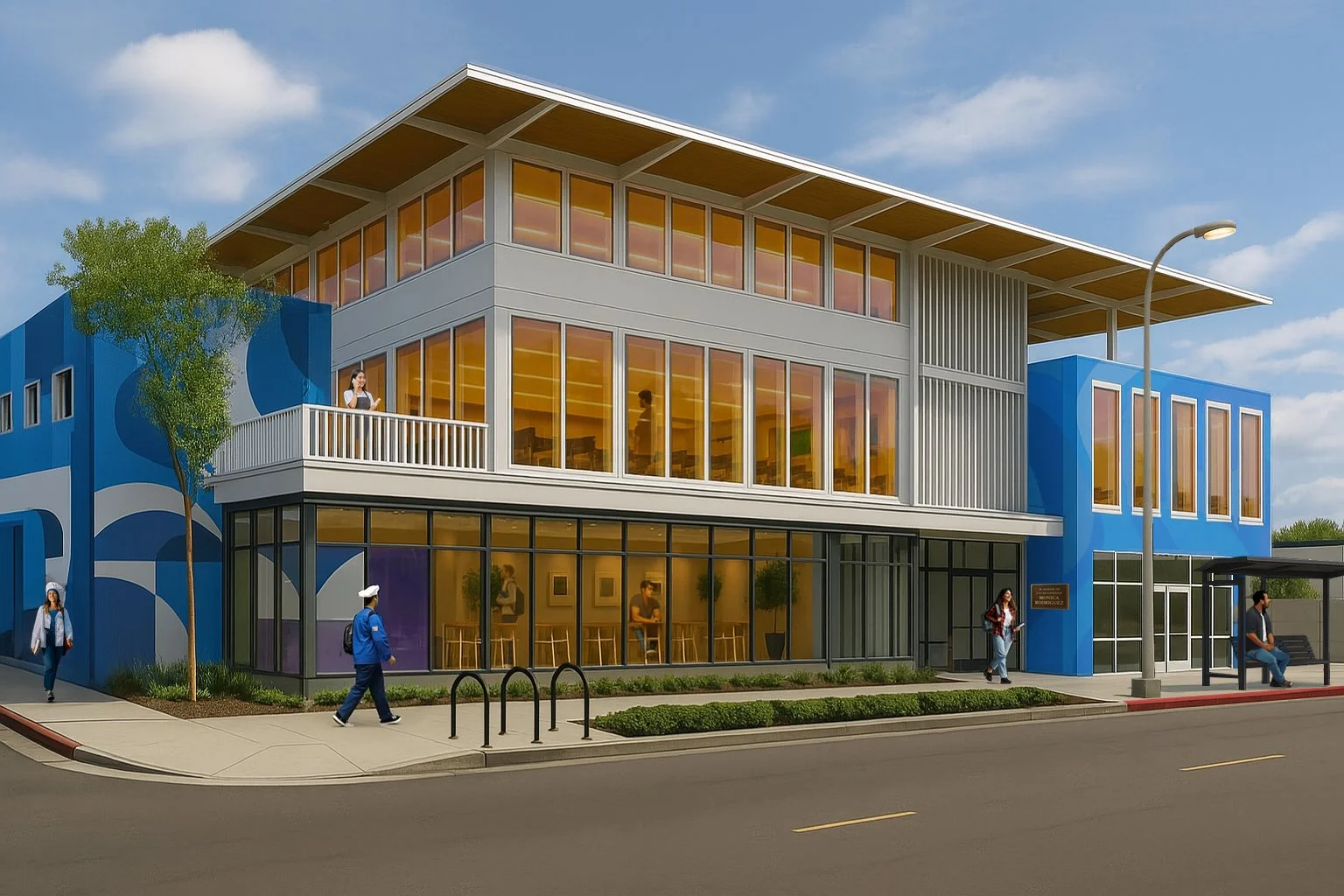
Option A: Vertical Campus (New Construction) To maximize the buildable area on a constrained site, we proposed a 3-story vertical campus. The ground floor activates the street with a public-facing cafe, while the upper levels feature state-of-the-art teaching kitchens. The design integrates cantilevered balconies to provide students with outdoor break areas without sacrificing floor area.
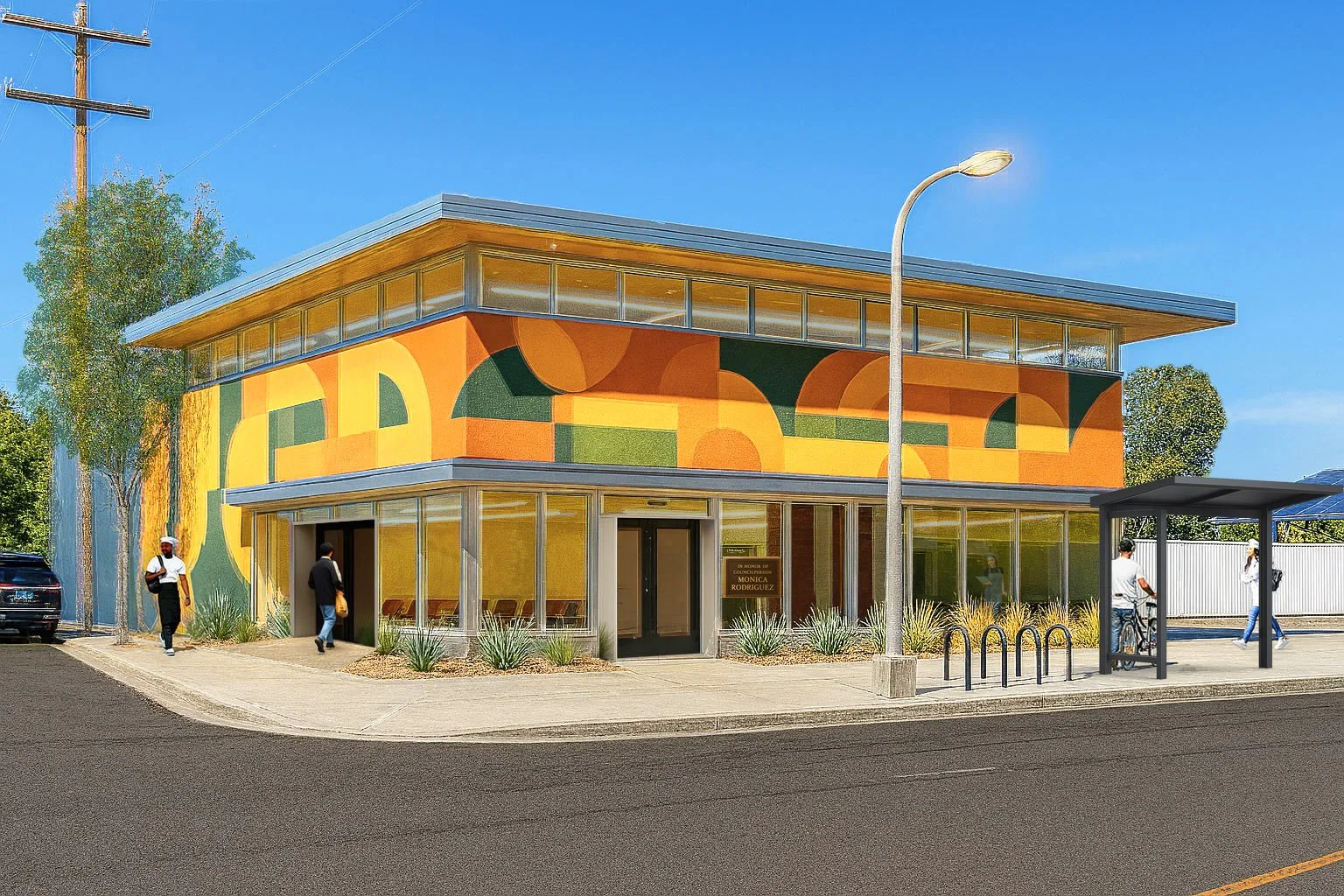
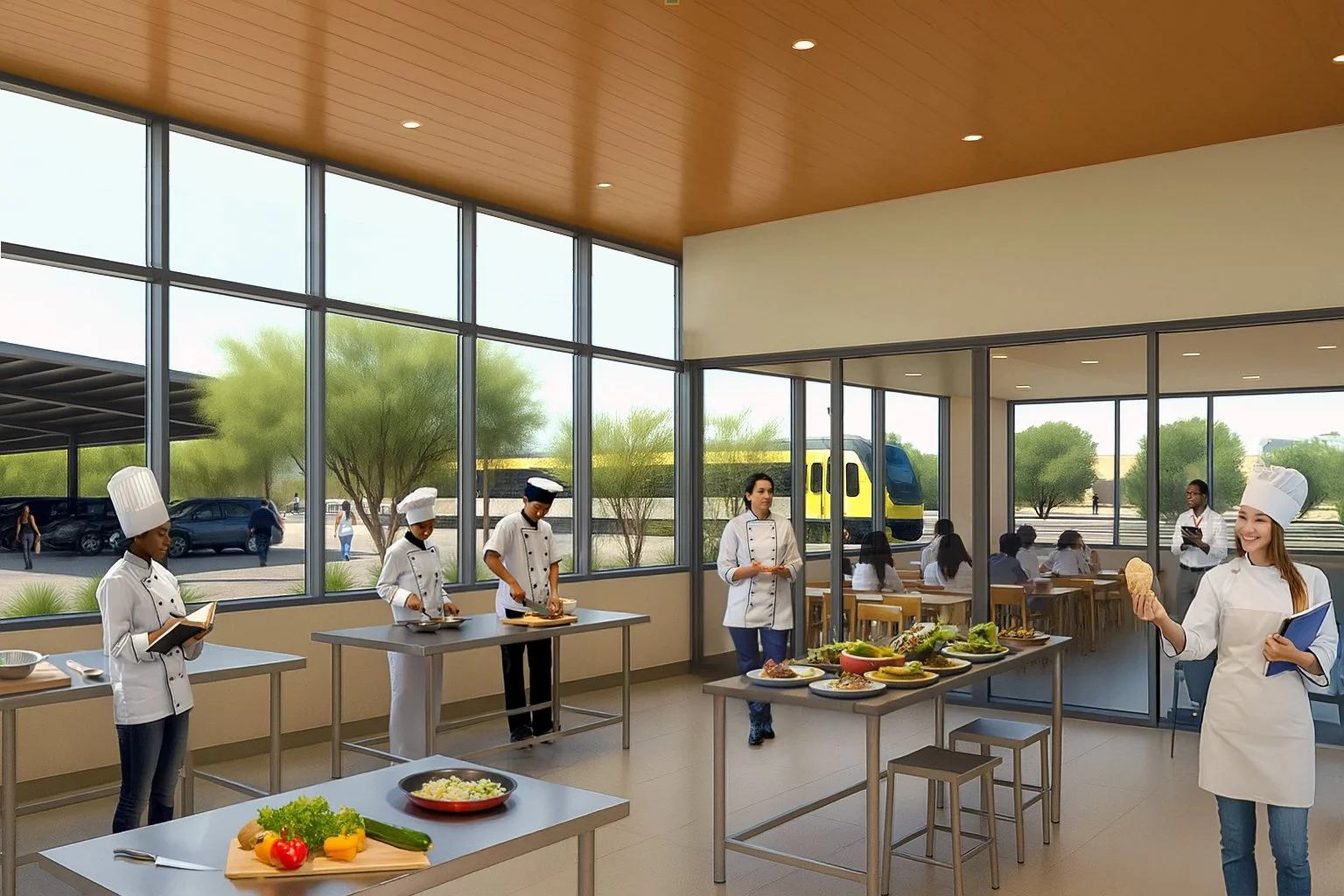
Option B: Adaptive Reuse (The 'Transparency' Model) Prioritizing sustainability and safety, this option repurposes an existing 2-story structure. The design philosophy centers on 'Visible Learning'—creating sightlines from the corridors into the classrooms. This extensive use of interior glazing not only enhances student safety (passive supervision) but also turns the cooking process into a visual showcase for visitors.